
Self-Compassion for Healthcare Professionals 6-Week Online Course
Learn the skills to care for yourself the way you care for your patients. A science-backed course in self-compassion, specifically for healthcare professionals. This course is available for all healthcare organizations upon request.
Why this course
Working in healthcare is demanding in ways that are hard to explain to others. The emotional weight of patient care, the gap between the care you want to give and the time you actually have, the professional culture that treats exhaustion as normal, these aren’t small things. And they add up.
This course was built for that reality. The course is a direct adaptation of the Mindful Self-Compassion program (as developed by Kristin Neff and Christopher Germer) adjusted for the time constraints, workplace culture, and specific stressors of people working in healthcare.
It is one of the few self-compassion programs designed not just for general wellbeing, but for what it actually feels like to do this work.
How can self-compassion work for you?
Most self-care strategies require you to step away from work to use them. Self-compassion is different. It is a skill you can apply in the moment: during a difficult patient interaction, between appointments, or when you’ve made a mistake and your inner critic is already running.
Instead of self-criticism and emotional suppression, self-compassion helps you to acknowledge difficulty without being consumed by it, and treat yourself with the same care you’d extend to a colleague going through the same thing.
Research consistently shows this doesn’t make you less effective or less empathetic toward patients. It protects the capacity for care over the long term.
What to expect
This course is an evidence-based adaptation of Mindful Self-Compassion, designed specifically for healthcare professionals and structured around the specific pressures, culture, and emotional demands of working in healthcare.
The course runs over six weeks, with one online session per week of approximately one hour. Sessions are live and interactive, not pre-recorded modules you work through alone. There is also one in-person day [date/location to be confirmed], which offers a deeper dive into the practice in a shared, face-to-face setting.
Each week builds on the last, so the course works best when you follow it in sequence. You don’t need any prior experience with mindfulness or self-compassion, just a willingness to show up and try.
What you'll learn
You’ll build a solid foundation in self-compassion. From understanding what it is and what happens in your body when you practice it, to applying it in the specific situations healthcare work throws at you.
- What self-compassion is (and is not) and why it works
- How mindfulness and self-compassion work together as practical tools
- How to address caregiver fatigue and burnout with self-compassion, in ways that go beyond rest and recovery
- How to motivate yourself without relying on self-criticism
- How to reconnect with the values and sense of purpose that brought you to healthcare
Practical details
When, where, and for who?
This course is available healthcare organizations upon request. Contact us for pricing and to discuss the options.
- 6 weeks live online course, 1 hour per week
- Or a one day workshop
- Specifically for healthcare professionals
- Price upon request (contact us via the button below)
What participants say after the course
Meet your teachers

Mila de Koning
Mila de Koning has been delivering mindfulness and self-compassion courses, workshops and coaching to different audiences since 2006. She worked for years in healthcare, within the mental health sector in various positions, including as a nurse, sociotherapist, teacher and prevention worker.
Since 2011, she has focused entirely on mindfulness and self-compassion. Within the VU Medical Centre she founded the Mindfulness Expertise Centre with the aim of bringing mindfulness and self-compassion to healthcare.
Together with Marga Gooren, Mila wrote the book Heart tor the Doctor, working with self-compassion in 2020 and together they are teaching self-compassion and mindfulness to doctors and other healthcare workers.
Mila is founder of the Self Compassion Academy and De Mindfulness Academie and Lead Teacher of the mindfulness and self-compassion teacher training. The Self Compassion Academy is the European partner of the Center for Mindful Self-Compassion (San Diego, U.S.A).
Sarah-Anne Schumann
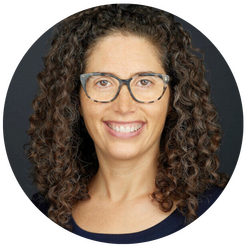
Dr. Sarah-Anne Schumann, MD, MPH is a physician who blends scientific training with heart-centered healing. She’s board-certified in both Family Medicine and Lifestyle Medicine. Her path has been shaped by a deep commitment to helping people feel well from the inside out.
She graduated from Harvard College, Harvard Medical School, and Columbia University’s Mailman School of Public Health. She previously served on the medical school faculty at the University of Chicago and the University of Oklahoma–Tulsa, and most recently held the role of Chief Medical Officer at Aetna Better Health of Oklahoma.
Alongside her medical career, she pursued additional training that aligns with her passion for integrative care. She completed several mindfulness teacher trainings, including Tara Brach and Jack Kornfield’s Mindfulness Meditation Teacher Certification Program (MMTCP), Brown’s Mindfulness Based Stress Reduction (MBSR) teacher training, and Mindful Self-Compassion (MSC) teacher training through the Self-Compassion Academy.
She completed a certificate in plant-based nutrition through Cornell and the T. Colin Campbell Center for Nutrition Studies, and is an RYT-500 advanced teacher of therapeutic yoga with additional training in chair yoga and restorative yoga and breathwork.
Frequently asked questions
* The science behind the program
Gardiner, Paula MD, MPH; Pérez-Aranda. et al. (2025). Self-Compassion for Healthcare Communities: Exploring the Effects of a Synchronous Online Continuing Medical Education Program on Physician Burnout. Journal of Continuing Education in the Health Professions
Germer, C. K., Neff, K. D. (2013). Self-compassion in clinical practice.
Smeets, E., Neff, K., Alberts, H., Peters, M. (2014). Meeting Suffering With Kindness: Effects of a Brief Self-Compassion Intervention for Female College Students.
Breines JG, Chen S. (2012). Self-compassion increases self-improvement motivation.
In this video, Kristin Neff draws on her 15 years of scientific research to share her insights on self-compassion.
What is Mindful Self-Compassion?
Mindful Self-Compassion is a training program that is based on scientific research and is accessible to everyone. The program emphasizes the practice of self-compassion and is rooted in mindfulness. MSC equips participants with vital skills and exercises to help them respond to difficult situations and challenging moments with kindness and care towards themselves.
What is MSC not?
It’s important to note that MSC is not a retreat in the traditional sense, as we encourage sharing experiences as part of the learning process. It’s also not considered psychotherapy. The program is designed to help individuals tap into their inner strength and learn to cope with difficulties, rather than the difficulties themselves being the topic of the conversation. This is also a key difference between MSC and therapy. Participants are expected to take responsibility for how they use these sources of strength to navigate challenging emotions and situations.
What is it that we do during MSC?
The MSC program is a mindfulness-based compassion training program designed to help participants experience self-compassion. The course includeses that can be easily integrated into everyday life. The training comprises education, guided short meditation exercises, reflection exercises, sharing experiences in small groups and large groups, and suggestions for homework. Typically, the training is offered in an 8-week format, only senior MSC teachers can provide the opportunity to experience the full MSC program in a more intensive format.